
Dental fillings are designed to restore teeth affected by decay while preserving as much natural tooth structure as possible. They are durable and can last for many years, but like many dental restorations, they are not intended to last forever.
Over time, daily chewing, temperature changes, and normal wear can affect both the filling and the surrounding tooth. Understanding why replacing dental fillings may eventually become necessary can help you recognize potential warning signs and seek care before small problems become larger ones.
At Majestic Dental, we believe informed patients make confident decisions about their oral health. Our goal is to help you understand your treatment options while protecting your natural smile whenever possible.
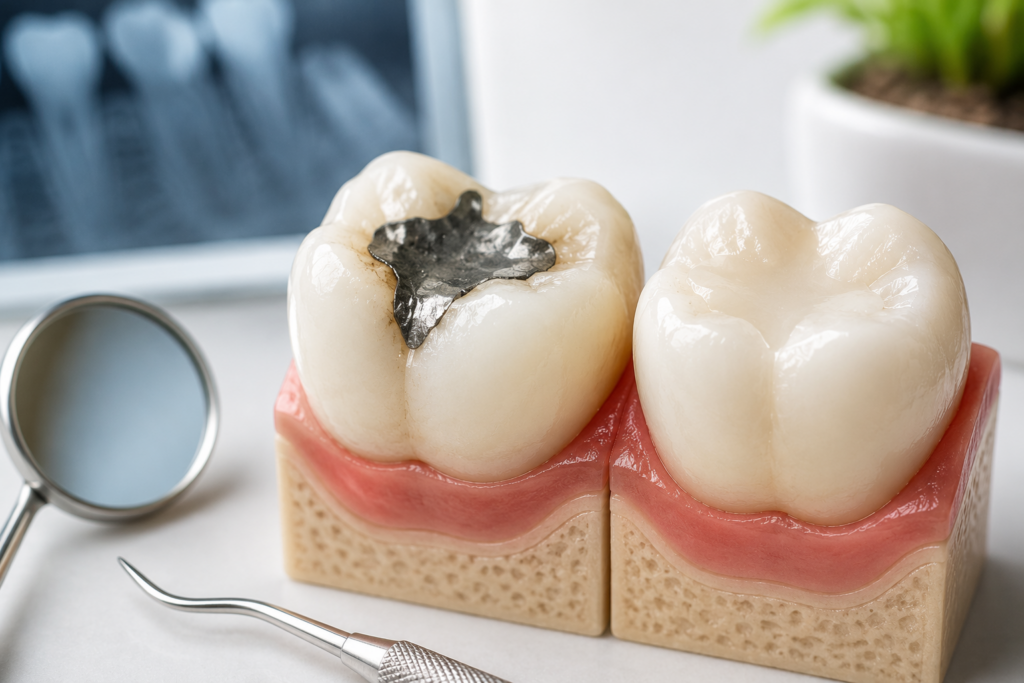
Dental Fillings Experience Everyday Wear
Every day, your teeth withstand significant pressure from chewing, biting, and speaking.
Although modern dental fillings are made from durable materials, they continue to experience these forces year after year. Eventually, even well-placed fillings can begin to wear down, especially if they have been in place for many years or are located in areas that receive heavy biting pressure.
Regular dental evaluations help monitor these restorations before normal wear becomes a larger concern.
Small Changes Can Develop Over Time
Fillings and natural teeth expand and contract slightly as they are exposed to hot and cold foods and beverages.
Over many years, these small movements may contribute to tiny gaps, worn edges, or minor fractures around a filling. While these changes are often impossible to detect at home, they may allow bacteria to reach areas beneath the restoration if left untreated.
Routine monitoring allows your dentist to identify these concerns early.
New Decay Can Form Around Existing Fillings
A filling repairs the damaged portion of a tooth, but it does not make the tooth immune to future decay.
If plaque and bacteria collect around the edges of an older filling, new cavities may develop where the restoration meets the natural tooth. This is one reason maintaining excellent oral hygiene and attending routine dental appointments remain important even after a cavity has been treated.
Early detection often allows treatment before more extensive damage occurs.
Signs a Filling May Need to Be Replaced
Many patients do not notice a problem until it becomes more significant, but there are several signs that may indicate it is time for an evaluation.
You may notice:
- Increased sensitivity to hot, cold, or sweet foods.
- A rough or chipped area on a previously restored tooth.
- Food frequently becoming trapped around a filling.
- A filling that feels loose or different when biting.
- New tooth pain near a restored tooth.
These symptoms do not always mean a filling needs replacement, but they are good reasons to schedule a professional evaluation.
Why Early Detection Matters
One of the biggest benefits of routine dental care is identifying small problems before they become larger ones.
If a worn or damaged filling is detected early, treatment may be simpler than waiting until additional tooth structure has been affected. Delaying evaluation could allow decay or fractures to progress, potentially requiring a more extensive restoration.
Scheduling regular dental exams and cleanings gives your dentist the opportunity to evaluate existing fillings, monitor your overall oral health, and recommend treatment when it is most beneficial.
Does Every Worn Filling Need to Be Replaced?
Not necessarily.
Many fillings continue to function well for years, even if they show minor signs of wear. Your dentist considers several factors before recommending replacement, including:
- The condition of the filling.
- The amount of healthy tooth structure remaining.
- Whether new decay is present.
- Any symptoms you may be experiencing.
- How the filling affects your bite.
Rather than replacing fillings simply because they are older, treatment recommendations are based on careful evaluation and your individual oral health needs.
What Happens If a Filling Cannot Be Repaired?
Sometimes a filling no longer provides enough support because too much of the natural tooth has been lost.
In these situations, dental crowns may be recommended to protect the remaining tooth structure and restore strength and function. A crown covers the visible portion of the tooth, helping protect it from additional damage while allowing you to continue chewing and speaking comfortably.
Your dentist will explain all appropriate treatment options and help you understand why one restoration may be more suitable than another.
How to Help Your Fillings Last Longer
While no dental restoration lasts forever, healthy habits can help extend the life of your fillings.
You can help protect your restorations by:
- Brushing twice each day with fluoride toothpaste.
- Flossing daily to remove plaque between the teeth.
- Limiting frequent sugary snacks and beverages.
- Avoiding chewing on hard objects such as ice or pens.
- Wearing a custom nightguard if you grind your teeth.
- Keeping regular dental appointments.
Consistent preventive dentistry and good home care help support both your natural teeth and existing restorations.
Protecting Your Long-Term Oral Health
Replacing a filling does not necessarily mean the original treatment failed. Teeth naturally change over time, and even durable restorations experience years of everyday use.
Routine dental visits allow your dentist to monitor existing fillings, identify changes early, and recommend care that supports your long-term oral health. The goal is always to preserve as much healthy tooth structure as possible while helping you maintain a strong, functional smile.
Conclusion
Dental fillings are an effective way to restore teeth affected by decay, but like all restorations, they may eventually need attention. Monitoring existing fillings through regular dental visits allows potential concerns to be identified before they become more extensive.
If you have noticed changes in an existing filling or are experiencing tooth pain, contact Majestic Dental to schedule an appointment. Our team is committed to providing personalized, educational care that helps you make informed decisions while protecting your smile for years to come.
Frequently Asked Questions
How long do dental fillings usually last?
The lifespan of a filling depends on several factors, including the material used, its size, its location, and your oral hygiene habits. Many fillings last for years, but regular dental evaluations are the best way to monitor their condition.
Can a filling be replaced before it falls out?
Yes. If a filling becomes worn, cracked, or develops decay around its edges, your dentist may recommend replacing it before it causes more significant problems.
Does every old filling need to be replaced?
No. Many older fillings continue to function well. Your dentist will evaluate the restoration and recommend replacement only if it is no longer adequately protecting the tooth.
What happens if I ignore a damaged filling?
A damaged filling may allow bacteria to enter the tooth, increasing the risk of additional decay or fracture. Early evaluation often helps preserve more natural tooth structure.
Can regular dental visits help my fillings last longer?
Yes. Routine dental exams and cleanings allow your dentist to monitor existing restorations, identify concerns early, and recommend care before small issues become larger problems.