
If your dental team recommends a deep cleaning, you may wonder why your usual cleaning is no longer enough. The difference comes down to your gum diagnosis and treatment history.
A regular cleaning generally supports prevention for patients without periodontitis. A deep cleaning, also called scaling and root planing, treats periodontitis when indicated. Periodontitis involves damage to the tissues and bone supporting the teeth.
These appointments have different purposes. At Majestic Dental, we want you to understand the findings behind a recommendation, what treatment involves, and how follow-up care supports your gum health.
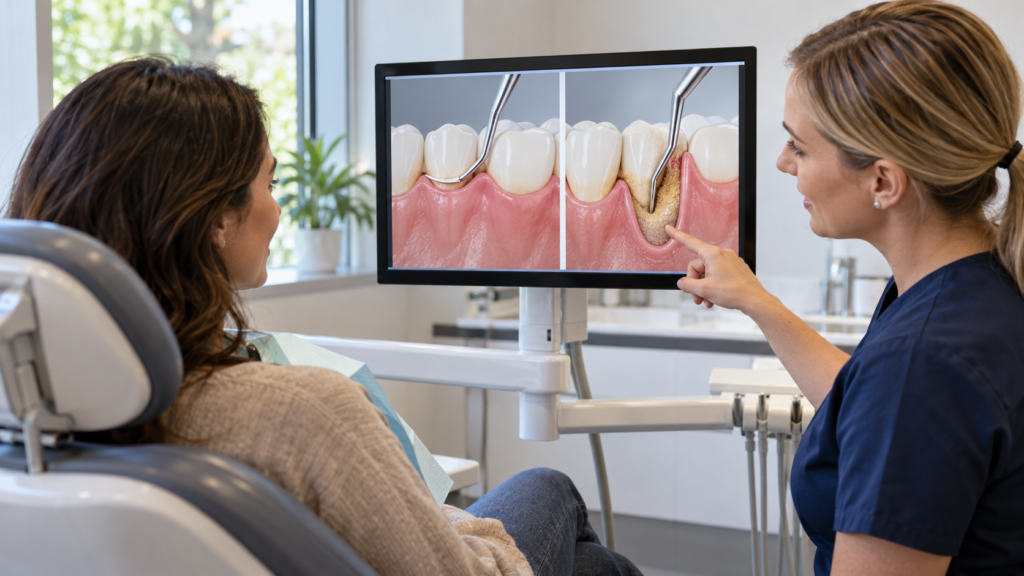
The Main Differences at a Glance
| Comparison | Regular dental cleaning | Deep cleaning |
| Main purpose | Preventive care and removal of deposits | Active treatment of periodontitis when indicated |
| Typical patient | Generally healthy gums or localized gingivitis, without periodontitis | Diagnosed periodontitis requiring scaling and root planing |
| Treatment approach | Removes plaque, tartar, and surface stains | Includes cleaning affected root surfaces within periodontal pockets |
| Appointments | Often completed during one routine visit | May require one or more treatment visits |
| Numbing | Often unnecessary | Local anesthesia may be used |
| Follow-up | Individualized preventive visits | Reassessment and ongoing periodontal care |
This is a general comparison. Significant gum inflammation without periodontitis can require a different cleaning approach, and previously treated periodontitis usually calls for periodontal maintenance.
What Does a Regular Dental Cleaning Do?
A regular professional cleaning is often called prophylaxis. It removes plaque, hardened deposits called tartar, and surface stains. The hygienist may use hand instruments, powered instruments, and polishing as appropriate.
Routine cleaning helps control buildup that brushing and cleaning between teeth cannot fully address. It can also be appropriate for localized gingivitis, meaning inflammation without the attachment or bone loss associated with periodontitis.
The distinction is not simply whether an instrument goes below the gumline. Diagnosis and the condition of the tooth-supporting tissues determine the appropriate service.
Our regular dental exams and cleanings also provide an opportunity to review changes in your mouth and discuss home care. Tell us about bleeding, sensitivity, medications, or previous gum treatment, even if your teeth feel comfortable.
What Is a Deep Cleaning?
“Deep cleaning” commonly refers to scaling and root planing, a nonsurgical treatment for periodontitis.
Scaling removes plaque and tartar from tooth surfaces, including affected areas beneath the gumline. Root planing addresses deposits and contaminated or rough areas on root surfaces as needed.
Treatment focuses on periodontal pockets, where the gum attachment has been affected and deposits can collect beyond the reach of everyday brushing and flossing. Its purpose is to reduce the factors contributing to inflammation and support periodontal healing.
Our deep cleaning service is planned around the areas involved and your individual needs. Not every patient needs treatment throughout the mouth, and not every case requires the same appointment schedule.
How Does the Dentist Decide Which Cleaning You Need?
An examination comes before the treatment recommendation. Your dental team considers several findings together:
- Gum appearance and bleeding during examination.
- Pocket measurements and changes in gum attachment.
- Recession, tooth mobility, and deposits.
- Bone support shown on X-rays when indicated.
- Previous periodontal treatment and relevant health history.
A pocket measurement describes the space between a tooth and the surrounding gum. Swelling can affect that measurement, so one number alone does not establish periodontitis or automatically mean you need scaling and root planing.
The dentist interprets measurements alongside attachment levels, bone findings, and other clinical information. Your history matters too: gums that look healthy after periodontal treatment may still need ongoing supportive care.
Ask the team to explain which findings support the diagnosis. Reviewing your gum chart or relevant images can make the recommendation easier to understand.
Do Bleeding Gums Automatically Mean You Need a Deep Cleaning?
No. Bleeding gums deserve evaluation, but bleeding alone does not identify the right treatment.
Gingivitis involves gum inflammation without the supporting-tissue damage that defines periodontitis. Localized gingivitis may respond to professional cleaning and improved home care. More widespread or severe inflammation without periodontitis may require a different therapeutic cleaning approach.
When periodontitis is present, a routine preventive cleaning does not provide the same treatment as scaling and root planing.
The absence of bleeding you notice at home does not prove that your gums are healthy, either. Keep recommended examinations rather than using symptoms alone to decide whether care is needed.
What Do the Appointments Feel Like?
During a regular cleaning, you may notice scraping, vibration, water, or pressure. Sensitive teeth or inflamed gums can make some areas less comfortable. Let the hygienist know so the approach can be adjusted.
Scaling and root planing may involve local anesthesia to numb the treatment area. Appointment length and the number of visits depend on the extent of treatment, your health, and comfort needs.
Before starting, ask how to signal discomfort or request a pause. Numbing and comfort measures should be discussed as part of your plan.
After a deep cleaning, temporary tenderness, sensitivity, or some bleeding may occur. Follow your specific instructions about eating while numb, brushing, cleaning between teeth, and any prescribed products. Contact the office if symptoms worsen or recovery differs from the guidance you received. Avoid relying on another person’s recovery timeline.
What Happens After a Deep Cleaning?
Treatment includes checking how your gums respond. At a reassessment visit, the team reviews healing, bleeding, pocket measurements, and home care.
Some areas may improve sufficiently for ongoing maintenance. Others may need additional treatment or evaluation by a periodontal specialist. Scaling and root planing cannot guarantee that no further care will be needed.
Why Periodontal Maintenance Matters
Periodontal maintenance provides continuing support after active periodontal treatment. It includes monitoring gum health and removing plaque and tartar above and below the gumline. Site-specific scaling and root planing may be included when indicated.
Its ongoing purpose distinguishes it from an initial course of active treatment. Maintenance is not simply a surface cleaning, and it is not automatically a full repeat of the original deep cleaning.
The interval between visits depends on your clinical findings, treatment response, and risk factors. Some patients need visits more frequently than a routine preventive schedule.
Successfully treated periodontitis still requires long-term supportive care. Improved measurements or a comfortable mouth do not erase the diagnosis or automatically make routine prophylaxis the appropriate next step.
How Can You Support Gum Health Between Visits?
Daily care complements professional treatment. Brush twice a day with fluoride toothpaste and a soft-bristled toothbrush, and clean between teeth daily using the method recommended for you.
If you have wider spaces, recession, or difficulty using floss, ask for a demonstration of suitable tools. Tell the team what makes the routine difficult so we can suggest practical adjustments.
Keep follow-up appointments and share changes in your health or medications. Avoid tobacco, and discuss relevant health conditions with your healthcare professionals.
Home care helps manage plaque, but it cannot remove established tartar or replace indicated periodontal treatment.
Questions to Ask About Your Cleaning Recommendation
Before scheduling treatment, consider asking:
- What is my gum diagnosis, and which findings support it?
- Which teeth or areas need treatment?
- What should I expect during and after the appointment?
- When will you reassess healing, and what ongoing care may I need?
You should understand the plan well enough to participate in the decision. If something remains unclear, ask for another explanation before treatment begins.
Frequently Asked Questions
Is a deep cleaning an upgraded regular cleaning?
No. Scaling and root planing treats periodontitis when indicated. It is not an optional upgrade for a healthier mouth or a replacement for an appropriate preventive cleaning.
Does everyone with tartar need a deep cleaning?
No. Tartar alone does not establish periodontitis. Your dentist considers gum attachment, bone support, pocket findings, inflammation, and treatment history before recommending care.
Can a deep cleaning cure periodontitis?
It can help control disease, but it does not erase your history of periodontitis or guarantee recovery of lost supporting tissues. Ongoing monitoring and maintenance remain important.
How many deep-cleaning appointments will I need?
Some treatment plans involve one visit; others require several. The extent of disease, areas involved, medical considerations, and comfort needs influence scheduling.
Is periodontal maintenance the same as a deep cleaning?
They have different roles. Scaling and root planing provides active treatment when indicated. Maintenance supports previously treated gums and can include cleaning below the gumline and localized root planing as needed.
Understand Your Gum Care Options With Majestic Dental
The right cleaning follows an evaluation of your gums, supporting tissues, and treatment history.
At Majestic Dental in Cottleville, MO, we explain your findings and discuss gum disease and periodontal therapy in terms you can understand. We welcome questions about the recommendation, appointment process, and follow-up plan.
Schedule a Gum Health Evaluation to discuss which type of care is appropriate for you.