
After a filling, crown, or other dental treatment, you may notice something unexpected: your teeth do not seem to come together exactly the way they did before.
Perhaps one tooth seems to touch first. Chewing may feel unfamiliar. Your jaw may feel tired after the appointment. Or you may simply be more aware of a tooth that was recently treated.
A change in how your bite feels does not automatically mean something is wrong. However, it is worth paying attention to, particularly if the sensation persists, becomes uncomfortable, or interferes with normal chewing.
At Majestic Dental, communication is an important part of dental care. If something does not feel right after treatment, let the dental team know. An evaluation can help determine whether you are becoming accustomed to a restoration or whether an adjustment or further examination may be appropriate.
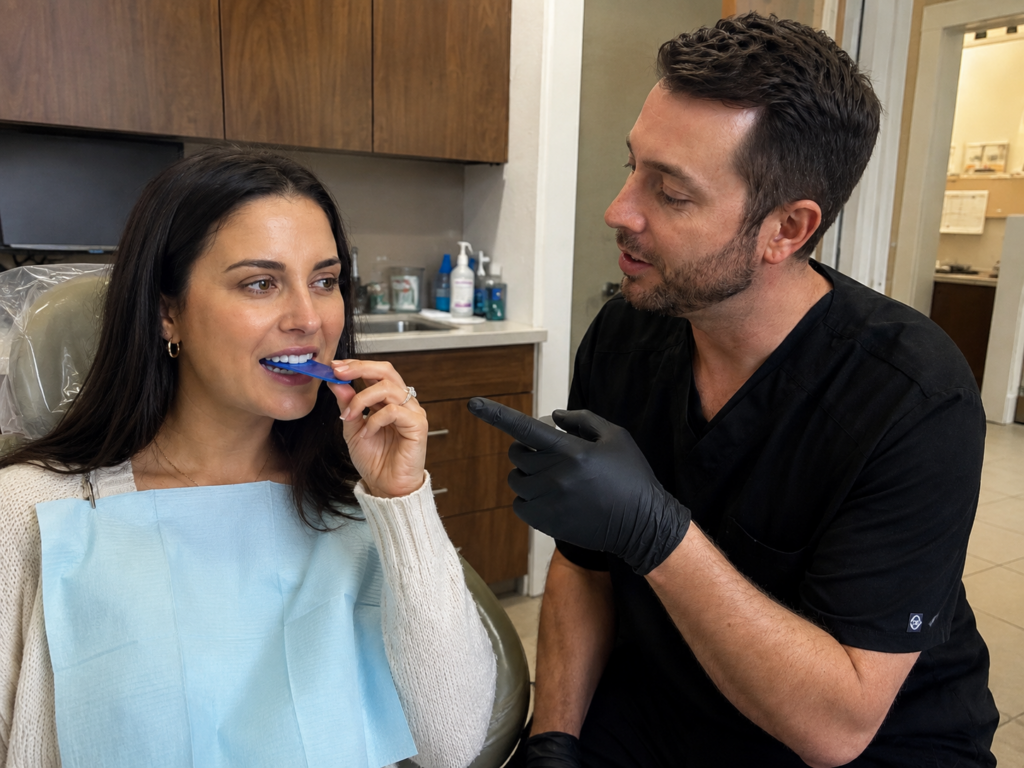
Why Can Your Bite Feel Different After Dental Work?
Your bite describes the way your upper and lower teeth come together.
Even relatively small changes to the shape of a tooth can affect how those contacts feel.
After restorative treatment, you may simply be more aware of the area that was recently treated. Your mouth is sensitive to small changes, so a new restoration can initially feel unfamiliar.
The type of treatment also matters.
Dental fillings, crowns, bridges, and other restorations are designed to restore damaged or missing tooth structure. How the finished restoration interacts with the opposing and surrounding teeth is an important part of restoring function.
Why Does One Tooth Seem to Hit First?
One of the most common ways patients describe a bite concern is that a particular tooth seems to “hit first.”
Normally, the upper and lower teeth contact one another in a coordinated way when you close or chew.
If a recently restored area makes contact differently than expected, that tooth may feel especially noticeable.
Patients may describe the sensation as:
- A filling or crown feeling “high”
- One tooth touching before the others
- Pressure on one tooth when chewing
- Difficulty finding a comfortable bite
- A bite that feels uneven
If the sensation persists or affects comfortable chewing, contact your dentist rather than trying to alter the restoration yourself.
A professional evaluation can determine what is causing the sensation and whether any adjustment or other care is appropriate.
Can a Filling Change the Way Your Bite Feels?
Yes. A new filling can make a tooth feel different because the damaged or decayed portion of the tooth has been rebuilt.
When placing a filling, the dentist restores the shape of the affected tooth while considering how it interacts with surrounding and opposing teeth.
Your bite is usually checked during the appointment.
However, once you leave the office, the numbness wears off, and you begin chewing normally again, you may notice a contact that was difficult to recognize while you were still in the dental chair.
If the bite continues to feel noticeably uneven, let the dental team know so it can be evaluated.
What About a New Dental Crown?
A crown covers more of the visible tooth structure than a filling, so patients may be particularly aware of a newly restored tooth.
Majestic Dental provides dental crowns, including same-day CEREC® crowns when appropriate.
Whether the restoration is completed using same-day technology or another treatment approach, fit and function remain important considerations.
A new crown may initially feel unfamiliar because its contours replace tooth structure that was previously damaged or worn.
However, persistent pressure, discomfort when chewing, or the feeling that the crowned tooth consistently contacts before neighboring teeth should be discussed with your dentist.
Could Numbness Affect How My Bite Feels?
It can affect how accurately you judge your bite immediately after treatment.
While local anesthesia is still affecting the area, it may be harder to tell exactly how your teeth are meeting.
Once the numbness wears off and you begin using your teeth normally again, you may notice the bite more clearly.
If something continues to feel different after normal sensation returns, tell the dental team what you are experiencing so the area can be evaluated.
Why Might My Jaw Feel Tired After an Appointment?
Sometimes the restoration itself is not the only reason your bite feels unusual.
Keeping your mouth open during dental treatment can temporarily fatigue the jaw muscles. That tired or stiff feeling may temporarily influence how you perceive your bite.
What you notice can depend on factors such as:
- The type of dental procedure
- How long your mouth remained open
- Your existing bite
- Your individual jaw health
If jaw discomfort persists, becomes worse, or occurs with symptoms such as restricted movement, ongoing painful clicking, or difficulty chewing, discuss it with your dentist.
What If I Already Grind or Clench My Teeth?
Existing tooth grinding or clenching may also influence how your teeth and jaw feel.
Grinding and clenching place additional forces on teeth and restorations. They may also contribute to tooth wear and jaw-muscle fatigue, which can make changes in tooth contact more noticeable.
If signs of grinding or clenching are present, recommendations depend on your individual needs.
In some situations, a nightguard may be discussed as an option to help protect the teeth.
However, not every patient with a changed bite needs a nightguard, and not every jaw symptom is caused by grinding or clenching.
Evaluation comes before deciding which treatment, if any, is appropriate.
Does a Different Bite Mean I Have TMJ/TMD?
Not necessarily.
A bite that feels different after dental treatment should not automatically be interpreted asTMJ/TMD.
Temporomandibular disorders can involve symptoms such as jaw discomfort, stiffness, restricted movement, or painful clicking, among other concerns. Evaluating TMD requires considering the broader clinical picture rather than assuming that one change in how the teeth meet confirms a jaw-joint disorder.
Similarly, the purpose of evaluating a recently restored tooth is to understand what is causing the new sensation, not to assume that the bite change has caused TMD.
If your bite concerns occur along with persistent jaw symptoms, your dentist may evaluate jaw function more closely and discuss appropriate next steps based on the findings.
How Does a Dentist Check Your Bite?
When you tell your dentist that your bite feels different, one of the first steps is understanding exactly what you are noticing.
You may be asked:
- Which tooth or area feels different?
- Does the sensation occur when you close your mouth or mainly while chewing?
- Does one tooth appear to contact first?
- Are you experiencing sensitivity or discomfort?
- Does your jaw feel sore, tired, or restricted?
The dentist can then examine the tooth, restoration, surrounding tissues, and bite contacts.
Depending on what needs to be evaluated, digital X-rays, intraoral cameras, digital impressions, or other diagnostic technology may also provide useful information.
The specific tools used depend on the individual concern.
Can My Dentist Adjust My Bite?
If an evaluation shows that a specific restoration is creating an unwanted contact, the dentist may recommend making a small adjustment to that restoration.
The goal is to help it function appropriately with the surrounding teeth while preserving the integrity of the dental work.
However, an adjustment is not automatically the answer whenever a bite feels different.
Tooth sensitivity, temporary muscle fatigue, grinding or clenching, another dental problem, or other factors can sometimes produce similar sensations.
That is why determining what is causing the problem comes before deciding whether an adjustment or another type of care is appropriate.
When Should I Contact My Dentist?
You do not need to diagnose a bite problem yourself.
Consider contacting the dental team if:
- One tooth consistently seems to hit before the others
- Chewing becomes uncomfortable
- The restored tooth develops increasing discomfort
- Your bite continues to feel noticeably uneven
- You have difficulty closing your teeth comfortably
- Jaw discomfort persists or becomes worse
- A crown or restoration feels loose or damaged
Severe pain, significant swelling, dental trauma, or another urgent concern may require more immediate emergency care.
When you are unsure, contacting the dental office allows the team to learn more about your symptoms and determine the appropriate next step.
Communication Matters After Dental Treatment
A restoration can look good, but how it feels and functions matters too.
Majestic Dental’s communication-first approach encourages patients to speak up about what they are experiencing before, during, and after dental treatment.
Your feedback can provide important information when the dental team evaluates the restoration, surrounding teeth, bite, or jaw.
Personalized care and comprehensive treatment planning also mean that a changed sensation is evaluated in context instead of assuming there is one explanation for every patient.
If your bite feels different after dental work, you do not need to simply wonder whether something is wrong.
Contact Majestic Dental to discuss what you are experiencing. The dental team can evaluate your bite, answer your questions, and determine whether additional care is appropriate for your individual situation.